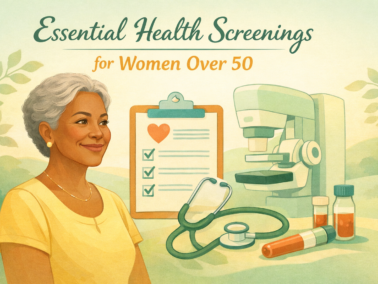
If you're a woman over 50—and ready to embrace your prime years with energy and confidence—you know those little changes like hot flashes, slower steps, or just feeling "off" can sneak up. But here's the good news: essential health screenings are your secret weapon for staying strong, independent, and full of life. They're quick, often covered by insurance, and can spot issues early when they're easiest to handle.
Think of screenings as your physical well-being foundation—the first pillar that supports everything else: sharp thinking, inner peace, and emotional glow. In this friendly guide, we'll cover the top screenings you need, with simple guidelines, what to expect, and tips to make it stress-free. Plus, grab your free printable checklist at the end!
Why Screenings Are a Game-Changer After 50
As we hit 50+, risks rise: Heart disease becomes our #1 threat, breast cancer detection is key, and osteoporosis affects 1 in 3 women. But early action changes everything—mammograms boost survival rates to over 99% if caught early! Screenings aren't scary chores; they're empowering check-ins that keep you dancing at weddings, chasing grandkids, and feeling fabulous.
No more guessing—let's dive into the essentials, backed by top guidelines from the American Cancer Society, CDC, and more.
Your Essential Health Screenings Checklist for Women Over 50
Here's your at-a-glance table. Talk to your doctor for personalized timing based on family history or risks.
| Screening | Who & When | Frequency | Why It Matters |
|---|---|---|---|
| Mammogram (Breast Cancer)[1][3][4] | All women 50-74 (earlier if family history) | Every 1-2 years | Spots 85-90% of cancers early—simple X-ray, survival >99% if localized. |
| Bone Density (DEXA) Scan (Osteoporosis)[1][2][3] | Age 65+ or 50-64 if at risk (early menopause, low weight) | Every 2 years if high risk | Prevents fractures; 50% of women over 50 affected—painless 10-min scan. |
| Colon Cancer (Colonoscopy or Stool Test)[1][3] | Average risk 45-75 | Colonoscopy every 10 years; stool test yearly | 90% curable early; removes polyps on the spot. |
| Cervical Cancer (Pap/HPV)[1][2][3] | Ages 30-65 | Pap every 3 years OR HPV every 5 years | Prevents 93% of cases—quick pelvic exam. |
| Blood Pressure[1][2] | All adults | Yearly (aim <120/80 mmHg) | "Silent killer"—prevents heart attacks/strokes. |
| Cholesterol/Lipids[1][3] | Ages 45+ at heart risk | Every 4-6 years | No symptoms, but predicts cardiovascular trouble. |
| Diabetes (A1C/Blood Sugar)[1] | Overweight + risks, age 35+ | Every 3 years | Affects 1 in 10 over 50—simple blood test. |
| Obesity/BMI[1] | All | Annual | Links to diabetes/heart issues—easy measurement. |
| Hepatitis C[1][2] | Born 1945-1965 or risks | One-time | Curable now; protects liver silently. |
| Vision & Hearing[1][7] | All 40+ | Baseline at 40; every 1-2 years | Keeps you safe and independent. |
| Bonus: Thyroid & Depression | Symptoms common post-50 | As needed[7] | Fixes fatigue/mood dips. |
What to expect: Most are quick office visits or imaging—no big prep needed. Mammograms? A few seconds of compression. Colonoscopy? Sedated nap!
How to Prep and Make Screenings Easy
- Schedule smart: Bundle with annual physicals—OB/GYN for pelvic/breast, primary doc for bloodwork.
- Prep tips: Fast for cholesterol? Bring family history list. Ask: "Any risks I should know?"
- Access help: Free/low-cost via insurance, community clinics, or programs like CDC's.
- Overcome nerves: Bring a friend, breathe deep—knowledge is power!
Tie It All Together: Screenings Fuel Your Holistic Glow
These aren't standalone—they boost your four pillars. Strong bones mean more yoga (physical), clear mind for book clubs (intellectual), confidence for deep connections (emotional), and peace knowing you're protected (spiritual).
Your next step: Pick one screening today. You've got this, Vera!
Ready to Stay Vibrant? Grab Your Free Checklist!
[Download your printable checklist here] (lead magnet form). Share in comments: What's your next screening? Subscribe for more women over 50 wellness tips—let's thrive together!
Sources: Guidelines from URMC, ACS, MedlinePlus, and more. Always consult your doctor.