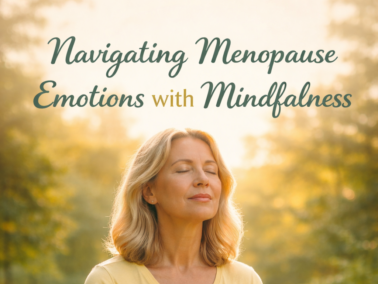
Let me ask you something. Have you ever been completely fine one moment—laughing at a funny video, enjoying your morning coffee—and then suddenly, out of nowhere, you're in tears over a TV commercial? Or snapping at your partner over something so small you can't even remember what it was five minutes later?
If you nodded just now, I want you to take a deep breath and hear this: You are not losing your mind. You are not "too emotional." You are not broken.
You are a woman navigating one of the most significant hormonal transitions of your life—and your emotions are simply your body's way of saying "Hey, something big is happening in here. Pay attention."
Here's the beautiful truth: Mindfulness is your most powerful, natural, zero-cost tool for riding these emotional waves with grace, clarity, and genuine self-compassion. Research confirms it, thousands of women swear by it, and today I'm going to walk you through exactly how to use it.[5][6][7]
As your Emotional Well-being guide (our fourth and deeply important pillar), this post is close to my heart. Because navigating menopause emotions isn't just about surviving the storm—it's about learning to dance in the rain. So settle in, gorgeous. This one's for you.
What's Really Happening to Your Emotions During Menopause
Before we dive into solutions, let's talk science—because understanding why you feel the way you feel is genuinely empowering.
During perimenopause and menopause, your estrogen and progesterone levels fluctuate wildly before eventually declining. Here's why that matters emotionally:[1][2][4]
- Estrogen directly influences serotonin and dopamine—your brain's "feel-good" chemicals. When estrogen drops, mood regulation takes a hit.
- Progesterone has natural calming, anti-anxiety properties. As it declines, anxiety and sleep disruption often increase.
- Cortisol (your stress hormone) spikes more easily, making you feel overwhelmed by things that wouldn't have bothered you before.
The result? A perfect hormonal storm that can show up as:
- 😤 Mood swings and irritability that seem to come from nowhere
- 😰 Anxiety or even panic attacks
- 😢 Unexpected sadness or low mood
- 🌫️ Brain fog and forgetfulness
- 😶 Emotional sensitivity and overwhelm
- 💔 Feeling disconnected from your sense of self[1][3][4]
Sound familiar? Here's what I need you to know: These are biological responses, not personal failures. Your brain chemistry is genuinely shifting—and that deserves compassion, not criticism.
Research shows that approximately 70% of menopausal women report significant emotional symptoms—so if you're in the thick of it right now, you are in very good company.[1][3]
Why Mindfulness Is a Game-Changer for Menopause Emotions
So what exactly is mindfulness, and why does it work so beautifully for menopause?
Simply put, mindfulness is present-moment awareness without judgment.[5][6] It's noticing what's happening—in your body, your mind, your emotions—without immediately reacting, catastrophizing, or criticizing yourself for feeling it.
And the science? It's genuinely impressive.
Mindfulness-Based Stress Reduction (MBSR) studies specifically focused on menopausal women show:[5][6][7]
- 40% reduction in menopause symptom severity
- Significantly reduced cortisol levels (goodbye, stress spiral!)
- Improved emotional regulation and resilience
- Reduced frequency and intensity of hot flashes
- Better sleep quality and less nighttime anxiety
Here's the brain science that makes this so exciting: Regular mindfulness practice literally shrinks the amygdala—your brain's fear and stress center—while strengthening the prefrontal cortex, the calm, rational part of your brain that says "It's okay. We've got this."[5][6]
In other words, mindfulness rewires your brain for calm. And the best part? It's free, has zero side effects, and you can start right now, today, with just five minutes.
Signs Your Emotions Are Calling for Mindful Attention
Sometimes we need a gentle nudge to recognize when our emotional well-being needs extra care. Check in with yourself—do any of these feel true lately?
- You're snapping at loved ones over small, insignificant things
- You feel anxious without being able to pinpoint why
- You cry unexpectedly or feel emotionally numb
- You're dreading social situations you used to enjoy
- You lie awake with racing, looping thoughts
- You feel like you don't quite recognize yourself anymore[1][3][4]
Lovely, these aren't signs that something is wrong with you. They're signals—your inner wisdom waving a flag and saying "I need some tender loving care right now." Mindfulness is how you answer that call.
8 Powerful Mindfulness Techniques for Menopause Emotions
Here's your toolkit, gorgeous. You don't need to master all eight—start with one that resonates and build from there.[5][6][7]
1. Mindful Breathing: The 4-7-8 Technique
This is your emergency calm button—and it works within minutes. The 4-7-8 breathing technique activates your parasympathetic nervous system (your body's built-in relaxation response), instantly dialing down anxiety and irritability.[5][6]
Here's how:
- Sit comfortably, close your eyes, relax your shoulders
- Inhale slowly through your nose for 4 counts
- Hold your breath for 7 counts
- Exhale completely through your mouth for 8 counts
- Repeat 3–4 cycles
Use it when: A hot flash hits, anxiety spikes, irritability surges, or you feel a mood swing coming on. It's discreet enough to use anywhere—at your desk, in the car, even in the supermarket queue!
2. Body Scan Meditation
We carry so much emotional stress in our bodies—tight shoulders, clenched jaw, knotted stomach—often without even realizing it. A body scan meditation gently releases that physical tension, creating space for emotional ease.[5][7]
10-minute practice:
- Lie down comfortably, close your eyes
- Take three deep, slow breaths
- Starting at the top of your head, slowly move your awareness down through your body
- Notice any tension, tightness, or sensation—without trying to fix it, just observe
- Breathe into each area of tension and imagine it softening with each exhale
- Continue down to your toes, ending with three grateful breaths
Best time: Before bed—it's a beautiful sleep preparation ritual that quiets racing thoughts and eases nighttime anxiety.
3. Mindful Journaling
When emotions feel overwhelming, getting them out of your head and onto paper is profoundly liberating. Mindful journaling isn't about writing perfectly—it's about honest, compassionate self-expression.[3][6]
Three powerful prompts to start with:
- "Today I feel... and that's okay because..."
- "What triggered me today was... and underneath that feeling is..."
- "I choose to respond to my emotions today with..."
Over time, journaling helps you spot emotional patterns—certain triggers, times of day, or situations that consistently affect your mood. That awareness is pure gold for managing menopause emotions.
4. The RAIN Technique
This is one of my absolute favourites for intense emotional waves—and it's beautifully simple once you know it.[6][7]
RAIN stands for:
- 🌧️ R – Recognize: "I notice I'm feeling anxious/angry/sad right now."
- 🌧️ A – Allow: "It's okay to feel this. I don't need to push it away."
- 🌧️ I – Investigate: "Where do I feel this in my body? What triggered it? What does this emotion need?"
- 🌧️ N – Nurture: "What would I say to a dear friend feeling this way? I offer that same kindness to myself."
RAIN transforms your relationship with difficult emotions—from fighting them (which amplifies them) to meeting them with curiosity and compassion. It's emotional alchemy, and it genuinely works.
5. Mindful Movement: Yoga and Walking
Sometimes emotions need to move through the body rather than be processed in the mind. Mindful movement combines physical release with emotional healing—a powerful double act.[5][6]
Yoga poses especially helpful for menopause emotions:
- 🧘 Child's Pose: Grounds and calms anxiety
- 🧘 Legs Up the Wall: Soothes the nervous system, reduces hot flashes
- 🧘 Gentle Seated Twists: Releases tension held in the torso
- 🧘 Savasana: Full-body surrender and restoration
20-minute mindful walk protocol:
- First 5 mins: Walk at your natural pace, just noticing your surroundings
- Next 10 mins: Sync breath with steps (inhale 3 steps, exhale 3 steps)
- Final 5 mins: Walk slowly, noticing 5 things you can see, 4 you can hear, 3 you can feel
Nature amplifies the benefits—even a garden or local park works beautifully.
6. Loving-Kindness Meditation (Metta)
Menopause can stir up surprising self-criticism—frustration with your body, impatience with your emotions, guilt about your reactions. Loving-kindness meditation is the antidote.[6][7]
Simple Metta practice (5–10 minutes):
Begin by directing these phrases toward yourself:
"May I be peaceful. May I be well. May I be kind to myself. May I be happy."
Then gradually extend outward:
- To someone you love: "May you be peaceful. May you be well..."
- To a neutral person
- To someone you find difficult
- To all beings everywhere
This practice softens irritability, rebuilds self-compassion, and gently repairs relationships strained by menopause mood swings. It's tender, powerful, and deeply healing.
7. Mindful Eating for Emotional Balance
Here's something many women don't realize: what you eat directly impacts your menopause emotions. Blood sugar crashes trigger anxiety and irritability; inflammatory foods amplify mood swings.[3][5]
Mindful eating practices:
- Eat slowly, savoring each bite without screens or distractions
- Notice hunger and fullness cues before, during, and after meals
- Choose mood-supporting foods: leafy greens, omega-3 rich fish, berries, nuts, fermented foods
- Limit mood disruptors: caffeine, alcohol, refined sugar, processed foods
- Stay hydrated—even mild dehydration affects mood and cognition
Food is medicine, lovely. Eating mindfully is an act of profound self-care.
8. Digital Detox Mindfulness
This one might surprise you—but hear me out. Social media and constant digital stimulation significantly amplify menopause anxiety.[3][6] Comparison culture, negative news cycles, and the dopamine rollercoaster of notifications keep your nervous system in a constant state of low-grade stress.
Try these digital detox rituals:
- Morning screen-free window: First 30 minutes after waking—no phone, just you
- Scheduled social media windows: Twice daily maximum, 20 minutes each
- Evening digital sunset: Screens off 1 hour before bed
- Replacement rituals: Herbal tea ceremony, nature sit, gratitude pause, gentle stretching
The quiet you create in digital-free moments is where mindfulness—and healing—truly flourishes.
Your Daily Mindfulness Routine for Menopause
Here's a simple, sustainable daily framework to weave these practices into your life:[3][6]
🌅 Morning (10 minutes)
- 4-7-8 breathing (3 cycles)
- Set a mindful intention: "Today I choose to respond rather than react."
☀️ Midday (5 minutes)
- Quick body check-in: Where am I holding tension?
- RAIN technique if emotions are running high
🌙 Evening (15 minutes)
- Mindful journaling (3 prompts)
- Body scan meditation before sleep
Habit stacking tip: Attach each practice to something you already do—morning coffee, lunch break, bedtime routine. No extra time needed, just intentional moments woven into your existing day.
Track your progress: A simple mood journal (1–10 scale daily) helps you spot patterns, celebrate wins, and see just how far you've come.
When to Seek Professional Support
Mindfulness is powerful—but it's a complement to professional care, not a replacement. Please reach out to your doctor or mental health professional if you experience:[1][2][4]
- Persistent low mood or depression lasting 2+ weeks
- Panic attacks that interfere with daily functioning
- Feelings of hopelessness or thoughts of self-harm
- Anxiety so severe it's affecting your relationships or work
Complementary options worth exploring: Cognitive Behavioral Therapy (CBT), Hormone Replacement Therapy (HRT), menopause-specialist counseling, and women's support groups.
And please remember this, lovely: Seeking help is not weakness. It is the most courageous, self-loving act you can take. Vibrant Vera asks for support when she needs it—because she knows her well-being is worth it.
How This Connects to Your Four Pillars
Emotional well-being doesn't exist in isolation—it's the heartbeat of your entire holistic health:
- 🏃♀️ Physical: Mindfulness reduces cortisol, improves sleep quality, and even eases hot flash intensity[5][6]
- 📚 Intellectual: Present-moment focus cuts through brain fog and sharpens concentration[5][7]
- 🌿 Spiritual: Mindfulness deepens self-awareness, inner connection, and sense of meaning[6][7]
- 💛 Emotional: This IS your emotional pillar in action—mindfulness is emotional well-being lived daily[3][6]
When you tend to your emotional health through mindfulness, every other pillar strengthens. That's the profound beauty of holistic well-being.
You've Got This, Gorgeous
Here's your takeaway, lovely: Menopause emotions aren't your enemy. They're messengers—wise, if inconvenient, signals from a body and soul in transformation. Mindfulness doesn't make the waves stop. It teaches you to surf them with grace.
You don't need to be perfect at this. You don't need to meditate for an hour or master every technique. You just need to start—one breath, one body scan, one journal entry at a time.
Vibrant Vera doesn't just survive menopause. She navigates it with wisdom, self-compassion, and a whole lot of grace. And so will you. 🌸
Start Your Mindfulness Journey Today!
👉 [Download your free Menopause Mindfulness Journal] — Daily prompts, mood tracking, and guided RAIN practice sheets designed specifically for women navigating menopause emotions.
💌 Subscribe for weekly Emotional Well-being tips for women over 50 — because you deserve support every single step of the way.
💬 Tell me in the comments: Which mindfulness technique are you going to try first? I genuinely want to know!
📲 Share this post with a woman in your life who needs this reminder today:
"Your menopause emotions aren't a breakdown. They're a breakthrough." 💛
As a certified wellness coach, I share evidence-based insights from NIH, Mayo Clinic, MBSR research, and mindfulness traditions. Always consult your healthcare provider for personalized medical guidance.