Let me share something with you that genuinely changed the way I think about aging—and I promise it's going to change yours too.
Did you know that women can lose up to 8% of their muscle mass every decade after the age of 30? And after 60, that rate can double? That means by the time many of us hit our 60s, we could have lost a significant chunk of the muscle that keeps us strong, energetic, and independent.[1][2]
Now before you close this tab in horror—stay with me. Because here's the part that makes me genuinely excited:
You have the power to fight back. Completely. At any age.
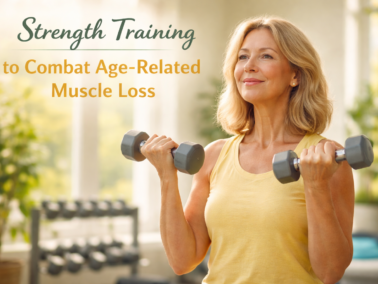
Strength training—lifting weights, using resistance bands, or even your own bodyweight—is the single most powerful tool science has given us to reverse age-related muscle loss, boost metabolism, strengthen bones, and feel more confident and capable than you have in years.[1][2][4]
This isn't about becoming a bodybuilder (promise!). This is about Vibrant Vera—that incredible woman over 50 who wants to carry her own groceries, chase her grandkids, travel the world, and live fully on her own terms. This is about building the strength to do life beautifully.
So let's dive in. Your strongest chapter is just beginning. 💪
What Is Age-Related Muscle Loss—and Why Should You Care?
First, let's talk about what's actually happening in your body, because understanding the why makes the what to do so much more motivating.
The medical term is sarcopenia—from the Greek words for "poverty of flesh." It's the progressive loss of muscle mass, strength, and function that begins as early as our 30s and accelerates significantly after menopause.[1][2][4]
Here's the timeline that surprises most women:
- Ages 30–50: Lose approximately 3–5% of muscle mass per decade
- After menopause: Loss accelerates to 8–15% per decade
- By age 70: Some women have lost up to 30% of their peak muscle mass[1][2]
And here's why menopause makes it worse: Estrogen plays a crucial role in maintaining muscle tissue. As estrogen declines during perimenopause and menopause, muscle protein synthesis slows, inflammation increases, and fat begins replacing muscle tissue.[2][3]
The consequences go far beyond feeling "softer":
- 🔥 Slower metabolism: Less muscle = fewer calories burned at rest = easier weight gain
- 🦴 Increased fracture risk: Muscle supports and protects bones
- ⚖️ Poor balance: Leading to falls—the #1 cause of injury-related death in women over 65
- 💉 Insulin resistance: Muscle is your body's primary glucose disposal site
- 🫀 Cardiovascular risk: Sarcopenia is independently linked to heart disease[1][2][3][4]
Sobering? Yes. But here's the empowering truth that changes everything:
Research proves that women in their 70s, 80s, and even 90s have successfully reversed sarcopenia through strength training. Your muscles don't know your age—they respond to the work you put in, period.[2][4]
Why Strength Training Is Your #1 Weapon
The American College of Sports Medicine (ACSM) is unequivocal: resistance training is the gold standard intervention for sarcopenia.[1][2] No pill, no supplement, no diet alone comes close to what picking up weights can do for your body after 50.
Here's what the science says strength training does for women over 50:[2][3][4]
✅ Rebuilds lost muscle mass — stimulates muscle protein synthesis at the cellular level
✅ Strengthens bones — reduces osteoporosis risk by 30–40%
✅ Boosts metabolism — burns calories for 24–48 hours after your workout (hello, afterburn!)
✅ Improves balance and coordination — dramatically reduces fall risk
✅ Sharpens cognitive function — yes, lifting weights makes you smarter!
✅ Elevates mood — releases endorphins, reduces anxiety and depression
✅ Reduces menopause symptoms — hot flashes, sleep disruption, and mood swings all improve
✅ Builds unshakeable confidence — there is nothing quite like feeling physically strong
And let's address the elephant in the room right now, shall we?
"But Won't I Get Bulky?"
Absolutely not, lovely—and here's the science to prove it. Women have approximately 10–20 times less testosterone than men. Testosterone is the primary hormone responsible for significant muscle bulk. Without it in those quantities, women simply cannot build the kind of mass that men do—even when training hard.[2][3]
What you will build is lean, toned, functional muscle that makes you look and feel incredible. Think strong, sculpted, and capable—not bulky. The women you see with very large muscles have trained specifically and intensively for years with that goal in mind. That is not what happens from 3 sessions a week with dumbbells!
Signs You May Already Be Experiencing Muscle Loss
Let's do a quick check-in, Vera. Do any of these sound familiar?
- Struggling to open jars or carry heavy shopping bags that used to feel easy
- Noticing increased body fat—especially around the middle—despite not changing your eating habits
- Feeling fatigued during activities that didn't used to tire you
- Poor balance, increased clumsiness, or feeling unsteady
- Slower recovery after physical activity
- Clothes fitting differently despite your weight staying roughly the same[1][2][4]
If you nodded at two or more of those—this is your sign. Not to panic, but to act. Because every single one of those changes is reversible with consistent strength training. Let's get you started.
Your Beginner's Strength Training Blueprint for Women Over 50
Here's your practical, progressive, Vera-approved strength training plan. No gym membership required to start—just you, some space, and the willingness to show up for yourself.[1][2][3]
Key Principles Before You Begin
- Start with bodyweight before adding resistance—master the movement first
- Focus on compound exercises that work multiple muscle groups simultaneously
- Progressive overload: Gradually increase weight, reps, or sets over time—this is how muscles grow
- Rest between sessions: Muscles grow during recovery, not during the workout—allow 48 hours between training the same muscle group
- Consistency beats intensity: 2–3 sessions per week consistently beats sporadic intense sessions every time[1][2]
The 7 Essential Exercises for Women Over 50
Each exercise includes three levels—start where you are, not where you think you should be. There is zero shame in wall push-ups. Zero.
1. 🦵 Squats — Your Lower Body Foundation
Targets: Quadriceps, glutes, hamstrings, core
Squats are the queen of functional movement—you do a version of this every time you sit down and stand up. Building squat strength means independence for life.[1][2]
- Beginner: Chair-assisted squat — stand in front of a chair, lower yourself slowly until you just touch the seat, then stand back up
- Intermediate: Bodyweight squat — feet shoulder-width apart, lower until thighs are parallel to floor
- Advanced: Goblet squat — hold a dumbbell at chest height as you squat
Sets & Reps: 3 sets of 10–12 reps | Rest: 60–90 seconds between sets
Form tip: Keep your chest tall, knees tracking over toes, weight in your heels. Never let your knees cave inward.
2. 🏋️ Deadlifts — The Posterior Chain Powerhouse
Targets: Hamstrings, glutes, lower back, core
Deadlifts teach your body to hinge properly—essential for picking things up safely and protecting your lower back for decades to come.[2][4]
- Beginner: Romanian deadlift with light dumbbells — stand tall, hinge at hips pushing them back, lower weights along your legs
- Intermediate: Conventional deadlift with dumbbells or barbell
- Advanced: Single-leg deadlift for balance and stability challenge
Sets & Reps: 3 sets of 8–10 reps | Rest: 90 seconds between sets
Form tip: Hinge at the hips, not the waist. Keep your back flat—never rounded. Think "proud chest" throughout.
3. 💪 Push-Ups — Upper Body Strength Builder
Targets: Chest, shoulders, triceps, core
The humble push-up is one of the most complete upper body exercises available—and every woman over 50 should be working toward a full one.[1][3]
- Beginner: Wall push-ups — hands on wall, lean in and push back
- Intermediate: Knee push-ups — hands and knees on floor, lower chest toward ground
- Advanced: Full push-ups — classic position, body in straight line
Sets & Reps: 3 sets of 8–12 reps | Rest: 60 seconds between sets
Form tip: Keep your core engaged throughout. Don't let your hips sag or pike up. Lower slowly—the downward phase builds as much strength as the push!
4. 🚣 Bent-Over Rows — Back Strength and Posture
Targets: Upper and mid back, biceps, rear shoulders
Most women over 50 have underdeveloped back muscles from years of desk work and forward-leaning posture. Rows fix this beautifully—and the posture improvement alone is worth it.[2][3]
- Beginner: Seated resistance band rows — sit on a chair, loop band around feet, pull toward your waist
- Intermediate: Single-arm dumbbell row — one hand on bench for support, row dumbbell to hip
- Advanced: Bent-over barbell row
Sets & Reps: 3 sets of 10–12 reps | Rest: 60–90 seconds between sets
Form tip: Squeeze your shoulder blades together at the top of each rep. Lead with your elbow, not your hand.
5. 🍑 Glute Bridges — Posterior Power and Back Protection
Targets: Glutes, hamstrings, lower back, core
Glute bridges are a game-changer for women over 50—they activate the glutes (often "switched off" from sitting), protect the lower back, and improve hip stability.[1][4]
- Beginner: Bodyweight bridge — lie on back, feet flat, lift hips to ceiling and squeeze
- Intermediate: Single-leg bridge — extend one leg while bridging on the other
- Advanced: Weighted bridge — place a dumbbell or barbell across your hips
Sets & Reps: 3 sets of 12–15 reps | Rest: 60 seconds between sets
Form tip: Squeeze your glutes hard at the top—hold for 2 seconds. Don't rush this one. Feel every rep.
6. 🙌 Overhead Press — Shoulder Strength and Independence
Targets: Shoulders, triceps, upper back, core
Overhead pressing keeps you able to reach high shelves, lift luggage into overhead compartments, and maintain the upper body strength that daily life demands.[2][3]
- Beginner: Seated dumbbell press — sit tall, press dumbbells from shoulder height to overhead
- Intermediate: Standing dumbbell press — adds core stability challenge
- Advanced: Barbell overhead press
Sets & Reps: 3 sets of 10–12 reps | Rest: 60–90 seconds between sets
Form tip: Don't arch your lower back as you press. Engage your core, keep your ribs down, and press straight up.
7. 🧱 Plank — Core Stability and Spine Protection
Targets: Core, shoulders, glutes, entire posterior chain
A strong core is the foundation of every other movement—and planks build it beautifully without the neck strain of crunches.[1][4]
- Beginner: Forearm plank — hold for 20 seconds, build gradually
- Intermediate: Full plank on hands — hold for 30–45 seconds
- Advanced: Plank with alternating leg lifts
Sets: 3 holds | Rest: 45–60 seconds between holds
Form tip: Your body should form a straight line from head to heels. Don't hold your breath—breathe steadily throughout.
Your Sample Weekly Schedule
Here's a simple, sustainable weekly plan that gives your muscles adequate work and recovery:[1][2][3]
| Day | Focus | Duration |
|---|---|---|
| Monday | Upper Body (Push-ups, Rows, Overhead Press, Plank) | 30–40 mins |
| Tuesday | Active Recovery (gentle walk, yoga, stretching) | 20–30 mins |
| Wednesday | Lower Body (Squats, Deadlifts, Glute Bridges) | 30–40 mins |
| Thursday | Active Recovery (swimming, light cycling, nature walk) | 20–30 mins |
| Friday | Full Body (all 7 exercises, lighter weight) | 40–45 mins |
| Saturday | Fun movement (dance, hiking, gardening) | Your choice! |
| Sunday | Rest and restore | — |
Starting out? Begin with just 2 sessions per week and build to 3 over your first month. Consistency is everything—two sessions every week beats three sessions some weeks and none others.
Fuel Your Muscles: Nutrition for Strength After 50
Here's something many women don't realize: You cannot out-train poor nutrition. What you eat is just as important as how you train when it comes to building and maintaining muscle after 50.[2][3][4]
Protein Is Your Best Friend
Protein is the building block of muscle—and most women over 50 are significantly under-eating it. Aim for 1.2–1.6 grams of protein per kilogram of body weight daily.[2][3][4]
Best protein sources for women over 50:
- 🥚 Eggs (complete protein, easy to digest)
- 🐟 Salmon and oily fish (protein + anti-inflammatory omega-3s)
- 🍗 Chicken and turkey breast
- 🫘 Legumes and lentils (plant-based powerhouses)
- 🥛 Greek yogurt (protein + gut-friendly probiotics)
- 🌱 Tofu and tempeh (excellent plant-based options)
Timing matters: Aim for 25–30 grams of protein within 30 minutes of finishing your workout—this is when your muscles are most receptive to rebuilding.[2][4]
Other Key Nutrients for Muscle Health
- Calcium + Vitamin D: The bone-muscle connection—essential for both strength and skeletal health[3][4]
- Magnesium: Supports muscle function, reduces cramps, aids recovery[3]
- Omega-3 fatty acids: Reduces muscle inflammation and supports protein synthesis[2][4]
- Creatine: Emerging research shows significant benefits for women over 50—worth discussing with your doctor[2]
Hydration Is Non-Negotiable
Muscle tissue is approximately 75% water. Even mild dehydration impairs strength, endurance, and recovery. Aim for 8–10 glasses of water daily—more on training days.[3]
Safety, Recovery, and Avoiding Common Mistakes
Let's keep you injury-free and progressing beautifully, lovely.[1][2][3]
Always Warm Up
Never skip your warm-up—5–10 minutes of dynamic movement (leg swings, arm circles, hip rotations, light marching) prepares your joints and muscles for work and dramatically reduces injury risk.
The Most Common Mistakes Women Over 50 Make
- ❌ Skipping rest days: Remember—muscles grow during recovery, not during the workout. Rest is productive!
- ❌ Going too heavy too soon: Ego lifting leads to injury. Start lighter than you think you need to and build gradually.
- ❌ Neglecting the back and core: Most women focus on arms and legs—but back and core strength is what keeps you pain-free and upright.
- ❌ Not eating enough protein: You cannot build muscle without adequate protein. Full stop.
- ❌ Comparing your progress to others: Your journey is uniquely yours. Compare yourself only to last week's you.[1][2][3]
Recovery Tools Worth Investing In
- Foam roller: 10 minutes post-workout reduces soreness significantly
- Epsom salt baths: Magnesium absorption through the skin eases muscle tension
- Quality sleep: Growth hormone—essential for muscle repair—is released primarily during deep sleep[2][3]
When to Consult a Professional
If you have osteoporosis, joint replacements, recent surgery, or significant balance issues—please work with a qualified physiotherapist or certified personal trainer before starting. There are safe modifications for every condition, but professional guidance is invaluable.[1][4]
Know the difference: Muscle soreness (dull ache 24–48 hours after training) is normal and expected. Sharp, acute pain during exercise is a signal to stop immediately.
How Strength Training Powers Your Four Pillars
Building physical strength doesn't just transform your body—it elevates every dimension of your holistic well-being:
- 💪 Physical: The core pillar—strength training IS physical well-being in its most powerful form[1][2]
- 📚 Intellectual: Learning proper form, understanding progressive overload, tracking progress—it's a constant mental challenge[3]
- 🌿 Spiritual: There's something profoundly empowering about building strength intentionally—it's a daily act of self-belief and commitment[4]
- 💛 Emotional: The confidence, mood elevation, and body image transformation that comes from getting stronger is genuinely life-changing[2][3]
When Vibrant Vera lifts, she doesn't just build muscle. She builds resilience, confidence, and a body that carries her through life with power and grace.
Strong Is Your New Normal
Lovely, here's what I want you to take away from everything we've covered today: Sarcopenia is common—but it is absolutely not inevitable.
You are not destined to get weaker, slower, or more fragile as you age. That narrative? We're rewriting it together. With two to three sessions of strength training per week, adequate protein, quality sleep, and the consistency that Vibrant Vera is famous for—you can build a body that is stronger at 60 than it was at 40.
Your muscles are waiting. They're patient, they're adaptable, and they will respond to every single rep you give them—regardless of your age, your starting point, or how long it's been since you last exercised.
Start with one exercise today. Just one. A wall push-up. A chair squat. A glute bridge on your living room floor.
That one rep is the beginning of your strongest chapter yet. 💪🌸
Ready to Get Strong? Start Here!
👉 [Download your free Strength Training Starter Guide] — Your complete beginner's plan with exercise photos, tracking sheets, and progressive overload guidelines designed specifically for women over 50.
💌 Subscribe for weekly Physical Well-being tips for women over 50 — because strong, vibrant, and independent is exactly what you deserve to be.
💬 Tell me in the comments: What's your biggest hesitation about starting strength training? I answer every single comment—let's work through it together!
📲 Share this post with a woman in your life who needs to hear this today:
"Strong is not a size. Strong is a choice—and it's never too late to make it." 💛
As a wellness coach, I share evidence-based insights from NIH, ACSM, Mayo Clinic, and the latest strength training research. Always consult your healthcare provider before beginning a new exercise program, especially if you have existing health conditions.