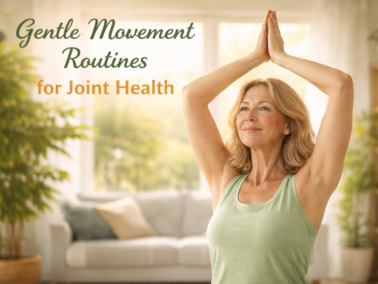
You wake up in the morning and the first thing you notice — before the light, before the birdsong, before the coffee — is the stiffness.
Your knees protest as you swing your legs over the side of the bed. Your hips feel like they've been welded overnight. Your hands take a few minutes to fully cooperate. Your shoulders ache in a way that feels new and unwelcome. And somewhere in the back of your mind, a quiet, resigned voice says:
"This is just what getting older feels like."
If that voice sounds familiar, this post is for you.
Because here is what I want you to know, right from the start: joint stiffness and discomfort after 50 are common — but they are not inevitable, and they are not irreversible. The research is unambiguous on this point. The right kind of movement — gentle, consistent, intentional movement — is the single most effective intervention for joint health at any age. More effective, in many cases, than medication. More sustainable than any supplement. And available to you, right now, exactly as you are.
The counterintuitive truth that changes everything? Rest is not the answer.
I know. When your joints ache, rest feels like the logical response. But the science tells a very different story. Inactivity accelerates every aspect of joint decline — cartilage thinning, synovial fluid reduction, muscle weakening, and inflammation. The joints that hurt most are often the ones we move least. And the joints we move least deteriorate fastest.
Your joints don't need you to stop moving. They need you to move differently — with intention, with gentleness, and with the understanding that every mindful movement is an act of care for the body that carries you through your life.
In this post, we're going to cover everything you need to know: the science of what's actually happening in your joints after 50, the seven principles of joint-friendly movement, seven gentle movement modalities backed by research, a complete weekly schedule with modifications for every fitness level, and the nutrition and mind-body practices that make it all work together.
Let's begin. 🌿
What's Actually Happening to Your Joints After 50
Before we talk about movement, let's talk about what's actually going on inside your joints — because understanding the biology makes the solution make sense.
The Anatomy of a Joint — A Quick Primer
A joint is where two bones meet. The ends of those bones are covered in cartilage — a smooth, rubbery tissue that acts as a cushion and allows bones to glide against each other without friction. The joint is enclosed in a capsule lined with the synovial membrane, which produces synovial fluid — the joint's natural lubricant. Surrounding the joint are ligaments (connecting bone to bone), tendons (connecting muscle to bone), and the muscles themselves — which are, in many ways, the joint's most important protective structure.
When all of these components are healthy and working together, movement is effortless. When any of them are compromised — by age, inactivity, inflammation, or injury — movement becomes uncomfortable, restricted, and eventually painful.
Six Key Changes That Affect Joint Health After 50
1. Cartilage Thinning
Cartilage has no blood supply — it receives its nutrients through the compression and release of movement. When we move, cartilage absorbs synovial fluid like a sponge; when we rest, it releases it. This is why movement is literally nourishing for cartilage — and why inactivity starves it. With age, cartilage gradually thins and loses its shock-absorbing capacity — a process significantly accelerated by inactivity, excess weight, and chronic inflammation. [1][2]
2. Synovial Fluid Reduction
The lubricating fluid inside your joints decreases with age and — critically — with inactivity. Less synovial fluid means more friction, more stiffness, and more discomfort. This is the primary cause of that characteristic morning stiffness that so many women over 50 recognise — the joints have been still all night, the synovial fluid has pooled, and the first movements of the day feel like starting a rusty engine. [1][2][3]
3. Muscle Loss (Sarcopenia)
As we explored in our post on [Strength Training to Combat Age-Related Muscle Loss], the muscles that surround and support our joints weaken progressively with age — a process called sarcopenia. Weaker muscles mean less shock absorption, less joint stability, and significantly more stress on the joint structures themselves. Muscle loss is one of the most significant — and most preventable — contributors to joint deterioration after 50. [1][2]
4. Ligament and Tendon Stiffness
The connective tissues that hold joints together and connect muscles to bones gradually lose their elasticity with age — becoming stiffer, less pliable, and more vulnerable to injury. This reduces range of motion and contributes to the general feeling of tightness and restriction that many women notice in their 50s and beyond. [1][2][3]
5. Hormonal Changes
This one is particularly significant for women — and often overlooked. Oestrogen has powerful anti-inflammatory and joint-protective effects. Its decline during perimenopause and menopause is directly associated with increased joint pain, stiffness, and inflammation — which is why many women notice a significant change in their joints during the menopausal transition, even without a formal arthritis diagnosis. [1][2]
6. Chronic Low-Grade Inflammation — "Inflammaging"
One of the most important concepts in ageing research is inflammaging — the gradual increase in systemic, low-grade inflammation that accompanies the ageing process. This chronic inflammation directly damages joint tissues, accelerates cartilage breakdown, and amplifies pain signals. It is driven by inactivity, poor nutrition, chronic stress, poor sleep, and excess body weight — all of which are modifiable. [2][3]
The Most Common Joint Concerns for Women Over 50
Osteoarthritis is the most common form of arthritis — affecting 32.5 million Americans, with women significantly more affected than men, particularly after menopause. It involves the gradual breakdown of cartilage, leading to pain, stiffness, and reduced range of motion — most commonly in the knees, hips, hands, and spine. [1][2]
Rheumatoid arthritis is an autoimmune condition — the immune system attacks the joint lining, causing inflammation, pain, and eventual joint damage. It is two to three times more common in women than men, and symptoms often worsen around menopause due to hormonal changes. [1][2]
General joint stiffness and reduced mobility — not meeting the diagnostic criteria for arthritis, but significantly affecting quality of life — is perhaps the most common joint concern of all for women over 50. The good news: it is also the most responsive to gentle movement. [1][2][3]
The Movement Paradox — And the Evidence That Changes Everything
Here is the paradox at the heart of joint health: the joints that hurt most are the ones we move least — and the joints we move least deteriorate fastest.
Inactivity accelerates every aspect of joint decline simultaneously: cartilage loses its nutrient supply, synovial fluid pools and stagnates, muscles weaken and lose their protective function, inflammation increases, and range of motion gradually diminishes.
And the evidence for movement as medicine is extraordinary. A landmark meta-analysis of 54 randomised controlled trials found that exercise is as effective as medication for managing osteoarthritis pain — with none of the side effects, none of the costs, and with the additional benefits of improved strength, mobility, mood, and overall health. [2][3]
The question is not whether to move. The question is how.
The Seven Principles of Joint-Friendly Movement
Before we get to the specific practices, let's establish the principles that make movement joint-friendly — because these principles are the foundation of everything that follows.
Principle 1 — Synovial Fluid Activation
Every time you move a joint, you pump synovial fluid through it — lubricating the cartilage surfaces, reducing friction, and delivering nutrients to the cartilage cells. This is why joints feel better after gentle movement than after rest. The stiffness you feel in the morning is not a sign that you should move less — it is your body's way of telling you it needs to move more. [1][2][3]
Principle 2 — Muscle Support
The muscles surrounding a joint are its primary shock absorbers and stabilisers. Strong, well-conditioned muscles reduce the load on the joint itself — protecting cartilage, ligaments, and tendons from excessive stress. Gentle strengthening is not just exercise — it is joint protection. Every squat, every resistance band exercise, every Pilates movement is an investment in the structural integrity of your joints. [1][2]
Principle 3 — Range of Motion Maintenance
Use it or lose it — this is the fundamental law of joint mobility. Joints that are regularly moved through their full range of motion maintain that range. Joints that are not, gradually lose it — and lost range of motion is significantly harder to recover than it is to maintain. This is why daily mobility work is not optional — it is the minimum investment required to keep your joints functional and free. [1][2][3]
Principle 4 — Anti-Inflammatory Movement
Gentle, rhythmic, sustained movement reduces systemic inflammation — one of the primary drivers of joint pain and deterioration. Regular moderate exercise measurably reduces inflammatory markers including C-reactive protein (CRP) and interleukin-6 (IL-6). Movement is, quite literally, anti-inflammatory medicine. [2][3]
Principle 5 — The Pain Distinction
This principle is critical — and getting it right makes the difference between movement that heals and movement that harms.
Discomfort is the normal sensation of muscles and joints being gently challenged — a mild ache, a feeling of effort, the pleasant tiredness of muscles that have been used. This is acceptable, expected, and a sign that your body is responding to movement.
Pain is sharp, acute, stabbing, or worsening during or after movement. This is your body's signal to stop, reassess, and — if it persists — consult your healthcare provider.
The golden rule: never push through pain. Discomfort is information. Pain is a boundary. Honour the difference. [1][2][3]
Principle 6 — Consistency Over Intensity
For joint health, 20–30 minutes of gentle daily movement is significantly more beneficial than occasional intense exercise. Joints respond to rhythm and regularity — to the steady, consistent pumping of synovial fluid, the gradual strengthening of supporting muscles, the daily maintenance of range of motion. You do not need to work hard. You need to show up consistently. [1][2]
Principle 7 — Always Warm Up
Cold joints are vulnerable joints. A 5-minute gentle warm-up before any movement routine is non-negotiable — not a nice-to-have, but a must-have. The warm-up increases blood flow to joint tissues, begins the production of synovial fluid, and prepares muscles and connective tissues for movement.
A simple warm-up sequence: Starting from the ankles and working up to the neck, perform gentle circles at each joint — ankles, knees, hips, wrists, elbows, shoulders, neck — 8–10 circles in each direction. This takes about 5 minutes and is one of the most effective joint health practices available. [1][2][3]
Seven Gentle Movement Modalities for Joint Health
Now we get to the heart of it — the seven movement practices that the research consistently identifies as most beneficial for joint health in women over 50. You don't need to do all seven. You need to find the ones that resonate with you, that fit your life, and that you will actually do consistently. Because the best movement routine is the one you'll keep.
Modality 1 — Gentle Yoga 🧘♀️
Why it works for your joints: Yoga is uniquely comprehensive for joint health — it simultaneously addresses range of motion, gentle strengthening, balance, proprioception, and mindful body awareness. It moves every major joint through its full range, builds the supporting muscles that protect those joints, and develops the body awareness that helps you move more safely and efficiently in everyday life. [1][2][3]
Best styles for women over 50:
- Hatha yoga: Gentle, slower-paced, foundational — ideal for beginners and those returning to movement
- Restorative yoga: Deeply supported poses held for several minutes — profoundly relaxing for joints and nervous system
- Yin yoga: Longer-held passive stretches targeting connective tissues — exceptional for joint mobility and flexibility
- Chair yoga: All the benefits of yoga with the support of a chair — ideal for those with significant knee, hip, or balance concerns
Key joint-health poses:
- Cat-Cow: Gentle spinal flexion and extension — lubricates every vertebral joint and releases back tension
- Gentle Warrior I & II: Builds hip and knee strength while opening hip flexors — addresses the most common joint concerns in women over 50
- Seated Forward Fold: Gently lengthens hamstrings and releases hip joints — reduces the hip tightness that contributes to knee and back pain
- Supine Twist: Releases spinal rotation and hip tension — one of the most therapeutic poses for lower back and hip joint health
- Child's Pose: Gently opens hips, knees, and ankles — a restorative pose that can be held for several minutes
- Legs Up the Wall: Reverses the effects of gravity on knee and ankle joints, reduces inflammation and swelling in the lower extremities — one of the most underrated joint health practices available
The research: Regular yoga practice significantly reduces joint pain and stiffness in women with osteoarthritis — and produces measurable improvements in balance, reducing fall risk by up to 35%. [2][3]
Modifications: Use a chair for standing poses if balance is a concern. Use blocks under your hands to reduce the range required in forward folds. Use a bolster or folded blanket under your knees in seated poses. There is no pose that cannot be modified — and a good yoga teacher will always offer options.
Recommended time: 20–45 minutes, 3–5 times per week.
Modality 2 — Tai Chi 🌊
Why it works for your joints: Tai chi is, in many ways, the perfect joint health practice — and the research behind it is exceptional. Its slow, flowing, weight-shifting movements gently mobilise every major joint through its full range of motion, while simultaneously building the deep stabilising muscles that protect those joints, improving balance and proprioception, and activating the parasympathetic nervous system — reducing the stress-driven inflammation that damages joint tissues. [1][2][3]
The research is remarkable: Multiple systematic reviews and meta-analyses confirm tai chi as one of the most effective interventions available for osteoarthritis pain, stiffness, and physical function — particularly for knee and hip osteoarthritis. And in a landmark 2016 study published in the New England Journal of Medicine, tai chi was found to be as effective as physical therapy for knee osteoarthritis — with the additional benefits of improved mood, reduced anxiety, and enhanced quality of life. [2][3]
Additional benefits: Tai chi produces some of the most significant improvements in balance and fall prevention of any exercise modality — a critical consideration for women over 50, for whom falls are a leading cause of injury and loss of independence.
Getting started: Look for beginner tai chi classes specifically designed for older adults — many are available online, free of charge, and can be done in your living room in comfortable clothing. The Yang style is the most widely taught and the most accessible for beginners.
Recommended time: 20–60 minutes, 2–5 times per week.
Modality 3 — Aquatic Exercise and Water Walking 💧
Why it works for your joints: Water is the most joint-friendly exercise environment available — and for women with significant joint pain, it can be genuinely life-changing. Here's why:
Buoyancy reduces the load on your joints by up to 90% in chest-deep water — allowing you to move freely and comfortably in ways that would be painful or impossible on land. Resistance provides gentle, 360-degree strengthening without the impact of land-based exercise. Warmth — particularly in heated pools — relaxes muscles, increases blood flow to joint tissues, and stimulates synovial fluid production. [1][2][3]
Activities to explore:
- Water walking — forward, backward, and sideways — the most accessible aquatic exercise
- Aqua aerobics classes — social, structured, and exceptionally joint-friendly
- Gentle water resistance exercises — arm circles, leg lifts, gentle squats in the water
- Swimming — particularly backstroke and breaststroke, which are gentle on most joints
The research: Aquatic exercise produces significant reductions in joint pain and meaningful improvements in physical function — and consistently shows higher adherence rates than land-based exercise. The reason is simple: it feels good. When movement doesn't hurt, you keep doing it. [2][3]
Practical note: Warm water pools heated to 83–88°F are particularly beneficial for joint health — the warmth provides additional therapeutic benefit beyond the buoyancy and resistance. Many community pools, YMCAs, and physiotherapy centres offer warm water exercise classes specifically for people with joint concerns.
Recommended time: 30–45 minutes, 2–3 times per week.
Modality 4 — Mindful Walking 🚶♀️
Why it works for your joints: Walking is the most accessible, most researched, and most universally recommended joint health intervention available. It maintains cartilage health through the compression-and-release mechanism, activates synovial fluid production, strengthens the muscles supporting the knees and hips, reduces systemic inflammation, and — when done mindfully, with attention to gait and posture — improves the movement patterns that protect joints from unnecessary stress. [1][2][3]
The research: A landmark study published in Arthritis & Rheumatology found that walking for just 10 minutes a day significantly reduces arthritis-related disability — and that adults with knee or hip osteoarthritis who walked regularly were significantly less likely to develop functional limitations over a four-year follow-up period. [2][3]
Joint-friendly walking tips:
- Footwear matters enormously: Supportive, well-cushioned shoes with good arch support reduce joint impact significantly. Replace walking shoes every 300–500 miles.
- Start on even surfaces: Pavements and flat paths before trails and uneven terrain
- Posture and gait: Walk tall — head over shoulders, shoulders over hips. Avoid the forward lean that increases knee and hip stress.
- Mindful attention: Notice how your feet contact the ground, how your hips move, how your arms swing. Mindful walking is both better for your joints and more meditative than distracted walking.
- Progression: Start with 10–15 minutes daily and add 5 minutes per week until you reach 30 minutes most days
Enhancement — Nordic Walking: Walking with poles reduces the load on knee and hip joints by up to 30% while engaging the upper body and improving stability. It is particularly beneficial for women with knee or hip osteoarthritis and is widely used in Scandinavian countries as a therapeutic exercise modality.
Recommended time: 10–30 minutes daily — the single most important movement habit you can build for joint health.
Modality 5 — Gentle Pilates 🎯
Why it works for your joints: Pilates addresses the root cause of much joint pain — poor postural alignment and weak core and stabilising muscles that allow joints to move in ways they were not designed to move. By building deep core strength, improving postural alignment, and developing precise neuromuscular control, Pilates reduces the mechanical stress on joints and teaches the body to move more efficiently and safely. [1][2][3]
Particularly beneficial for: The spinal joints (cervical, thoracic, and lumbar), hip joints, and knee joints — the most commonly affected in women over 50. Many women with chronic back pain, hip pain, or knee pain find Pilates to be the most transformative movement practice they have ever tried.
Key principles that make Pilates joint-friendly:
- Neutral spine: Maintaining the natural curves of the spine during all movements — reducing compressive forces on spinal joints
- Controlled breathing: Coordinating breath with movement — activating the deep core muscles that stabilise the spine and pelvis
- Precise alignment: Every movement performed with attention to joint alignment — reducing wear and tear on cartilage surfaces
- Gradual progression: Building from the simplest, most supported movements to more complex ones — never exceeding the body's current capacity
Modifications and options:
- Mat Pilates with props: Foam rollers, resistance bands, and small balls can make mat Pilates more accessible and more joint-friendly
- Reformer Pilates: The spring-based resistance of the Reformer is exceptionally joint-friendly — providing support and assistance through range of motion while building strength. Many women with significant joint pain find Reformer Pilates more accessible than mat work.
- Chair Pilates: For those with limited floor mobility — all the core and alignment benefits of Pilates from a seated position
The research: Pilates significantly improves joint pain, functional mobility, balance, and quality of life in women with osteoarthritis — with particular benefits for spinal and hip joint health. [2][3]
Recommended time: 30–45 minutes, 2–3 times per week.
Modality 6 — Stretching and Mobility Work 🌸
Why it works for your joints: Stretching and mobility work maintain and restore range of motion — the most fundamental measure of joint health and functional independence. The ability to reach overhead, to bend and straighten your knees fully, to rotate your spine, to turn your head — these are not luxuries. They are the movements that make daily life possible. And they are movements that, without regular attention, gradually diminish. [1][2][3]
Four types of stretching and mobility work:
Static stretching — holding a stretch for 20–30 seconds, allowing the muscle and connective tissue to gradually lengthen. Best performed after movement, when tissues are warm. Key stretches for women over 50: hip flexor stretch, hamstring stretch, calf stretch, chest opener, neck side stretch.
Dynamic stretching — controlled, rhythmic movement through range of motion, without holding. Ideal as a warm-up before other movement. Examples: leg swings, arm circles, gentle torso rotations, walking lunges.
Foam rolling and self-myofascial release — using a foam roller or massage ball to release tension in the muscles and fascia (connective tissue) that surround joints. Tight fascia restricts joint mobility just as effectively as tight muscles — and foam rolling addresses it directly. Focus areas: IT band, quadriceps, hip flexors, thoracic spine, calves.
Joint circles — the simplest and most direct joint health practice available. Gentle circular movements of the ankles, knees, hips, wrists, elbows, shoulders, and neck directly lubricate joints with synovial fluid. Do these every morning before getting out of bed — 8–10 circles in each direction at each joint. This single practice, done consistently, will produce noticeable improvements in morning stiffness within two to three weeks.
Daily minimum: 10–15 minutes of joint circles and key stretches — the minimum effective dose for joint health maintenance.
Recommended time: 10–20 minutes daily — ideally morning (joint circles) and evening (static stretching).
Modality 7 — Qigong 🌬️
Why it works for your joints: Qigong — an ancient Chinese practice combining gentle movement, breathwork, and meditative awareness — is perhaps the most underrated joint health practice available in the West. Its slow, flowing movements gently mobilise joints through their full range of motion, its breathwork activates the parasympathetic nervous system and reduces the stress-driven inflammation that damages joint tissues, and its meditative quality develops the body awareness that makes all movement safer and more effective. [1][2][3]
Particularly beneficial for: Women who find tai chi too complex initially — qigong movements are generally simpler and more repetitive, making them easier to learn and practice independently. Women with fibromyalgia, chronic fatigue, or significant pain levels often find qigong more accessible than any other movement modality.
The research: Qigong significantly reduces pain and improves physical function in women with fibromyalgia, osteoarthritis, and chronic joint pain — with effect sizes comparable to tai chi and yoga. It also produces significant reductions in anxiety, depression, and perceived stress — addressing the stress-inflammation-joint pain cycle directly. [2][3]
Additional benefits: Improved sleep quality (poor sleep increases inflammatory markers and joint pain), enhanced emotional well-being, and a profound sense of calm and groundedness that many women describe as one of the most valuable aspects of their practice.
Getting started: Many free qigong videos are available on YouTube — search for "qigong for beginners" or "qigong for joint pain." Lee Holden and Ken Cohen are two widely respected teachers with accessible online content.
Recommended time: 20–30 minutes, 3–5 times per week.
Your Complete Weekly Gentle Movement Schedule
Here is a complete, practical weekly schedule that weaves all seven modalities into a balanced, sustainable routine. This is a guide — not a prescription. Adapt it to your life, your body, and your current capacity.
The Full 7-Day Routine at a Glance
| Day | Morning (10–15 min) | Main Movement (20–45 min) | Evening (5–10 min) |
|---|---|---|---|
| Monday | Joint circles + dynamic warm-up | Gentle Yoga — Hatha or Restorative | Legs Up the Wall + deep breathing |
| Tuesday | Walking warm-up (5 min easy walk) | Mindful Walking (20–30 min) | Static stretching routine |
| Wednesday | Joint circles + dynamic warm-up | Gentle Pilates — mat or reformer | Foam rolling + gentle stretches |
| Thursday | Qigong warm-up sequence (10 min) | Tai Chi — beginner class or video | Restorative yoga pose + breathing |
| Friday | Joint circles + dynamic warm-up | Aquatic Exercise or Swimming | Gentle stretching + self-massage |
| Saturday | Walking warm-up (5 min easy walk) | Mindful Walking + Nordic Walking | Yin yoga or restorative stretching |
| Sunday | Gentle joint mobility sequence | Rest or very gentle Qigong | Gratitude-Compassion Journal + breathing |
Modifications for Beginners
If this schedule feels overwhelming, start here:
- Choose 3 days per week — Monday, Wednesday, and Friday is a good starting structure
- Select 2–3 modalities that feel most accessible and appealing to you
- Reduce duration by half — 10–15 minutes of main movement rather than 20–45
- Build gradually over 4–6 weeks — adding 5 minutes or one additional day when the current schedule feels comfortable and easy
- Progress marker: When a session feels genuinely easy — not just manageable, but easy — it is time to progress
Modifications for Significant Joint Pain
If you are managing significant joint pain, osteoarthritis, or post-surgical recovery:
- Prioritise aquatic exercise, chair yoga, and gentle stretching — the most joint-friendly options available
- Start with 10 minutes of main movement and build only when you are consistently pain-free during and after sessions
- Consult your healthcare provider before beginning — and consider working with a physiotherapist initially to establish safe movement patterns
- Internal link: See our post on [Essential Health Screenings for Women Over 50] — discussing joint health with your provider and establishing baseline assessments is an important first step
The Daily Non-Negotiables
Regardless of what else you do or don't do on any given day, these two practices are your minimum effective dose for joint health:
1. Daily joint circles — 5 minutes, every morning before getting out of bed.
Ankles, knees, hips, wrists, elbows, shoulders, neck — 8–10 circles in each direction. This single practice, done consistently, will produce noticeable improvements in morning stiffness within two to three weeks.
2. Daily walking — even 10 minutes is measurably beneficial.
Ten minutes. That's it. The research is clear: even this modest amount of daily walking significantly reduces arthritis-related disability and maintains the cartilage health that protects your joints.
These two practices alone — done every single day — will produce meaningful, measurable improvements in joint comfort and mobility within four to six weeks. Everything else is a bonus.
Tracking Your Progress
Progress with joint health is often gradual — and easy to miss if you're not paying attention. Track these markers weekly:
- Morning stiffness level (1–10 scale): How stiff do you feel in the first 30 minutes after waking?
- Range of motion: Can you reach further, turn more easily, move more freely than last week?
- Pain levels: Note any changes in frequency, intensity, and duration of joint discomfort
- Energy and mood: Gentle movement improves both — often before joint symptoms improve significantly
- Function: Can you do things you couldn't do before — climb stairs more easily, sit and stand more comfortably, reach overhead without wincing?
These functional improvements are the most meaningful measures of progress — and they often arrive before the pain fully resolves.
Nourishing Your Joints From the Inside Out
Movement is the most powerful joint health intervention available — but it works best when supported by the nutrition that gives your joints the raw materials they need to repair, lubricate, and protect themselves.
Anti-Inflammatory Nutrition for Joint Health
The foods you eat either fuel inflammation or fight it — and since inflammation is the primary driver of joint pain and deterioration, your diet is a direct lever on your joint health.
Foods that fight joint inflammation:
- Omega-3 fatty acids — found in fatty fish (salmon, sardines, mackerel), flaxseed, chia seeds, and walnuts. Omega-3s directly reduce the production of inflammatory prostaglandins and cytokines — the biochemical drivers of joint pain. [1][2][3]
- Colourful vegetables and fruits — the antioxidants in brightly coloured produce (berries, leafy greens, bell peppers, sweet potatoes) neutralise the inflammatory free radicals that damage joint tissues
- Turmeric — curcumin, the active compound in turmeric, is one of the most extensively researched natural anti-inflammatories available. Multiple studies show measurable reductions in joint pain and stiffness with regular turmeric consumption — best absorbed with black pepper (piperine) and a healthy fat [2][3]
- Ginger — contains gingerols and shogaols with potent anti-inflammatory properties — research shows comparable effects to ibuprofen for joint pain in some studies [2][3]
- Green tea — polyphenols with measurable anti-inflammatory and cartilage-protective effects — 2–3 cups daily is a simple, evidence-based joint health practice
For a comprehensive guide to anti-inflammatory nutrition, see our post on [Nutrition for Bone Health and Osteoporosis Prevention] — the nutritional principles that protect your bones also protect your joints.
Hydration and Synovial Fluid
This is one of the most overlooked aspects of joint health — and one of the simplest to address.
Synovial fluid is primarily water. Adequate hydration is directly linked to joint lubrication, cartilage nutrition, and joint comfort. Dehydration — even mild, chronic dehydration — is one of the most common and most easily corrected contributors to joint stiffness and discomfort.
Aim for 8–10 glasses of water daily — more on movement days, more in hot weather, more if you drink coffee or alcohol (both dehydrating). If you struggle to drink enough water, try herbal teas (anti-inflammatory bonus), water with lemon and ginger, or simply keeping a large water bottle visible throughout the day.
Key Supplements for Joint Health
While food should always be the foundation, certain supplements have meaningful research support for joint health:
- Collagen (Type II): Directly supports cartilage health — research shows measurable reductions in joint pain and stiffness with 10–40mg of undenatured Type II collagen daily. Bone broth is a food-based source. [2][3]
- Omega-3 fatty acids: If dietary intake is insufficient — 1,000–2,000mg of combined EPA/DHA daily from a high-quality fish oil or algae-based supplement
- Vitamin D: Essential for bone and joint health — deficiency is extremely common in women over 50 and directly associated with increased joint pain. Get your levels tested and supplement accordingly. [1][2]
- Glucosamine and chondroitin: Widely used for osteoarthritis — the research is mixed, but many women report significant benefit. Worth a 3-month trial if you have osteoarthritis. [2][3]
- Turmeric/curcumin: 500–1,000mg of curcumin daily — look for formulations with piperine (black pepper extract) for enhanced absorption
Always consult your healthcare provider before beginning any supplement regimen — particularly if you are taking medications, as some supplements interact with common drugs.
Foods That Harm Your Joints
Just as important as what you eat is what you limit:
- Processed foods and refined sugar: Directly trigger the inflammatory cascade — the single most impactful dietary change for joint health is reducing ultra-processed food consumption
- Trans fats: Found in many processed and fried foods — directly increase inflammatory markers and should be avoided as much as possible
- Excess alcohol: Increases systemic inflammation, interferes with joint repair, and disrupts the sleep that is essential for tissue recovery
- Refined carbohydrates: White bread, white rice, pastries — spike blood sugar, triggering an inflammatory response that directly affects joint tissues
The practical approach: an 80/20 rule. Nourish your joints with anti-inflammatory foods 80% of the time. Enjoy life — including the foods you love — the other 20%. Perfection is not the goal. Consistency is.
The Mind-Body Connection — Stress, Inflammation, and Your Joints
This section might surprise you — but it is one of the most important in this entire post.
Your joints are not separate from your emotional life. They are part of the same integrated biological system. And the connection between your psychological state and your joint health is not metaphorical — it is measurable, documented, and profoundly important.
The Stress-Inflammation-Joint Pain Cycle
Chronic psychological stress — the kind that many women over 50 carry as a constant background hum — triggers the release of pro-inflammatory cytokines, including interleukin-1 (IL-1), interleukin-6 (IL-6), and tumour necrosis factor-alpha (TNF-α). These are the same inflammatory molecules that directly damage joint tissues, accelerate cartilage breakdown, and amplify pain signals. [1][2][3]
In other words: chronic stress is directly worsening your joint pain. Not indirectly, not metaphorically — directly, through measurable biochemical pathways.
Research confirms this: women with high chronic stress levels show significantly higher markers of joint inflammation and report greater joint pain — independent of their physical activity levels. The stress is doing damage that movement alone cannot fully undo. [2][3]
And the cycle compounds: joint pain increases stress and anxiety, which increases inflammation, which worsens joint pain. Without addressing the stress component, many women find themselves trapped in this cycle — doing all the right things physically and still not getting the relief they deserve.
Mind-Body Practices That Break the Cycle
The good news is that the mind-body practices that reduce stress also directly reduce inflammation — breaking the cycle at its source.
Mindfulness meditation measurably reduces inflammatory markers including IL-6 and CRP — with effects that are detectable in the bloodstream after as little as eight weeks of regular practice. See our post on [Daily Meditation Practices for Inner Peace] for a complete guide to building a meditation practice. [2][3]
Yoga and tai chi are doubly effective for joint health — they simultaneously address the physical aspects of joint health (range of motion, muscle strength, synovial fluid activation) AND the stress-inflammation pathway. This is why the research on these practices for joint health is so consistently strong — they are working on multiple levels at once. [1][2]
Self-compassion — the practice we explored in depth in [Self-Compassion: Replacing Harsh Self-Talk] — reduces the psychological stress of living with chronic pain, breaking the pain-stress-more pain cycle. Research shows that self-compassionate women with chronic pain report lower pain intensity, less pain-related disability, and significantly better quality of life than their self-critical counterparts. [1][2][3]
Breathwork — slow, diaphragmatic breathing — activates the parasympathetic nervous system directly, reducing the cortisol and inflammatory cytokines that the stress response produces. Even five minutes of slow breathing (4 counts in, 6 counts out) measurably reduces inflammatory markers. [2][3]
The Holistic Insight
This is why holistic well-being is not a luxury — it is a biological necessity.
Your joint health programme is most effective when it addresses movement, nutrition, AND stress management together — because the inflammation that damages your joints is driven as much by your nervous system as by your physical activity levels. A yoga practice that also calms your nervous system is more powerful than exercise alone. A meditation practice that reduces your inflammatory markers is as important as your omega-3 supplement. A self-compassion practice that reduces your chronic stress is as therapeutic as your aquatic exercise class.
The four pillars of well-being are not separate. They are one integrated system. And your joints are the living proof.
Gentle Movement and Your Four Pillars of Well-Being
One of the things I love most about gentle movement as a practice is how deeply it nourishes every dimension of your well-being — not just the physical. Let's look at how it connects to each of your four pillars.
💪 Physical Well-Being
Gentle movement is the most direct and most powerful investment in your physical well-being — maintaining the mobility, strength, and pain-free function that make every other aspect of physical health possible. Without functional joints, everything else becomes harder: exercise, sleep, daily activities, independence, quality of life.
The practices in this post — yoga, tai chi, walking, Pilates, aquatic exercise, stretching, qigong — work together to address every aspect of joint health simultaneously: synovial fluid activation, cartilage nutrition, muscle strengthening, range of motion maintenance, inflammation reduction, and balance improvement.
For the complete physical well-being picture, see our posts on [Strength Training to Combat Age-Related Muscle Loss], [Nutrition for Bone Health and Osteoporosis Prevention], and [Essential Health Screenings for Women Over 50].
📚 Intellectual Well-Being
The connection between physical movement and brain health is one of the most exciting areas of current neuroscience research — and the findings are remarkable.
Physical movement — particularly mind-body practices like yoga, tai chi, and qigong — directly enhances cognitive function, neuroplasticity, and brain health. Exercise increases the production of BDNF (brain-derived neurotrophic factor) — often called "Miracle-Gro for the brain" — which promotes the growth of new neurons and the strengthening of neural connections. Regular movement is one of the most powerful things you can do for your cognitive health as you age. [2][3]
For more on keeping your brain sharp after 50, see our posts on [Lifelong Learning: Keeping Your Brain Sharp After 50], [Reading Habits That Boost Cognitive Health], and [Puzzles, Games, and Brain Training for Mental Agility].
🌿 Spiritual Well-Being
Mindful movement — yoga, tai chi, qigong, walking in nature — is one of the most accessible and most profound spiritual practices available. When you move your body with intention and awareness, something shifts. The thinking mind quiets. The present moment becomes vivid and immediate. The body — so often treated as a problem to be managed — becomes a source of wisdom, sensation, and grace.
Many women describe their yoga or tai chi practice as the most genuinely spiritual part of their week — more grounding, more present, more connected than almost anything else they do. The body in intentional motion becomes a vehicle for presence, gratitude, and connection to something larger than the thinking mind.
For more on spiritual well-being, see our posts on [Finding Purpose and Meaning in Your 50s] and [Daily Meditation Practices for Inner Peace].
💛 Emotional Well-Being
Gentle movement is one of the most effective natural antidepressants and anxiolytics available — and the mechanisms are well understood. Exercise reduces cortisol (the primary stress hormone), increases endorphins (natural pain-relieving and mood-elevating chemicals), increases serotonin and dopamine (the neurotransmitters of well-being and motivation), and provides the embodied sense of agency and self-efficacy that is foundational to emotional resilience.
For women navigating the emotional landscape of midlife — the mood fluctuations of perimenopause, the identity transitions, the accumulated stresses of a full life — gentle movement is not just good for the joints. It is medicine for the soul.
For more on emotional well-being, see our posts on [Navigating Menopause Emotions with Mindfulness], [Building Emotional Resilience During Life Transitions], and [Self-Compassion: Replacing Harsh Self-Talk].
Your Joints Are the Hinges of Your Freedom
Let's come back to where we started — that quiet, resigned voice that says: "This is just what getting older feels like."
I want to offer you a different story.
Your joints are not your enemy. They are not evidence of failure or decline or the inevitable diminishment of age. They are the hinges of your freedom — the structures that allow you to walk, to reach, to embrace, to move through your life with ease and grace. They have carried you through every experience of your life. They deserve your attention, your care, and your movement.
Vibrant Vera is discovering this. She is discovering that gentle movement is not a consolation prize for the exercise she used to do — not a lesser, diminished version of "real" fitness. It is a sophisticated, science-backed, deeply nourishing practice that honours her body exactly as it is, while steadily, gently, and powerfully restoring the mobility and comfort she thought she had lost.
She is rolling her ankles in circles before she gets out of bed in the morning. She is walking for 20 minutes after lunch, noticing the way her hips loosen after the first five minutes, the way her mood lifts by the time she turns for home. She is unrolling her yoga mat on Tuesday evenings and moving through Cat-Cow and Warrior and Child's Pose with a gentleness and attentiveness she never brought to exercise before. She is noticing — week by week, quietly and without fanfare — that the stiffness is a little less. The mornings are a little easier. The stairs are a little kinder.
She is not running a marathon. She is not in a gym. She is simply moving her body — gently, consistently, intentionally — with the same care and compassion she is learning to bring to every aspect of her well-being.
You don't need to run a marathon. You don't need a gym membership or expensive equipment or an hour a day you don't have.
You need 20 minutes. A yoga mat or a pair of walking shoes. And the willingness to move your body with the same gentleness and care you would offer someone you love.
Every mindful movement is an act of love for the body that carries you through your life.
Start today. Gently. Intentionally. And with deep compassion for yourself. 💛🌿
Start Your Joint Health Journey Today
📥 Download your free Joint Health Starter Guide — your 7-day gentle movement challenge, complete with daily routines, a modification guide for every fitness level, an anti-inflammatory nutrition cheat sheet, and a morning joint circle sequence you can do before you even get out of bed. Designed specifically for women over 50 who are ready to move differently.
💌 Subscribe for weekly Physical Well-being insights for women over 50 — because your body deserves the same intentional nourishment as your mind and your spirit.
💬 Tell me in the comments: Which gentle movement practice resonates most with you? Are you a yoga lover, a devoted walker, or are you curious about tai chi or qigong for the first time? I'd love to know where you're starting — and I'd love to cheer you on. 🌿
📲 Share this post with a woman in your life who needs to hear this:
"Your joints don't need you to stop moving. They need you to move differently — with intention, with gentleness, and with the understanding that every mindful movement is an act of love for the body that carries you through your life." 💛
As a certified wellness coach, I share evidence-based insights drawn from the Arthritis Foundation, Harvard Health Publishing, the Mayo Clinic, the National Institute on Aging, and the American College of Rheumatology. This post is for informational and educational purposes only and does not constitute medical advice. If you are experiencing significant joint pain, please consult your healthcare provider before beginning a new exercise programme.
References
[1] Arthritis Foundation — Exercise and Joint Health
[2] Harvard Health Publishing — Exercise and Arthritis
[3] Mayo Clinic — Arthritis and Exercise
[4] National Institute on Aging — Exercise and Physical Activity
[5] American College of Rheumatology — Exercise for Arthritis